Did you know weightlifting belts can boost your lifting by up to 15%? This fact shows how vital these tools are for enhancing workouts and preventing injuries. While exploring gym accessories, I found the right weightlifting belt is not just an add-on. It’s essential for dedicated lifters. The market offers a wide range, from the budget-friendly Iron Bull Strength 6” Nylon Weight Belt at $35 to the high-end SBD Lever Belt at $280. In this article, I’ll discuss the major benefits of weightlifting belts and review the best ones for 2024. We’ll see what makes these belts stand out and how they can improve your training.
Key Takeaways
- Weightlifting belts can enhance lifting performance significantly.
- Options vary dramatically in price, catering to different budgets.
- Comfort and durability are key factors when choosing a belt.
- Different designs cater to various lifting styles and preferences.
- Understanding the unique benefits can improve your training routine.
Understanding the Benefits of Weightlifting Belts
Weightlifting belts offer many benefits that can make my training better. With a belt, I feel more stable and supported while lifting heavy weights. It helps keep my core tight and my posture correct, which can stop injuries during tough lifts.
Increased Stability and Support
A weightlifting belt gives the support needed for a strong spine. This is key in exercises like squats or deadlifts. The belt makes me keep a good posture while also making me aware of my back’s position. This cuts down on the risk of getting hurt by bending or twisting the wrong way.
Enhanced Intra-Abdominal Pressure
Weightlifting belts also help by increasing pressure in my core area. This pressure keeps my spine stable and supports lifting heavier weights. It lowers the chances of hurting my lower back. Using a belt is a great way to lift safely and strongly.
Improved Lifting Performance
Using a weightlifting belt can lead to better lifting performance. Studies show that those wearing belts lift more weight. The extra support makes me more confident to try heavier weights. It also allows me to do more reps with heavier weights, which helps my muscles grow over time.
Top Weightlifting Belts: A Comprehensive Review
I’m on a quest to find the best weightlifting belts for peak strength training performance. I pay close attention to a belt’s build, comfort, size, and how versatile it is. These factors help me hit my weightlifting goals. Let’s dive into some top picks.
Durability and Construction
The Dark Iron Fitness Weightlifting Belt is known for its solid durability. It’s even approved for competitions by USAPL. It boasts a thickness of 4 millimeters and is 4 inches wide. This makes it strong enough to support lifts up to 600 pounds. Meanwhile, the Harbinger 4-Inch Nylon Weightlifting Belt is made from sturdy 346-count nylon. It’s a great pick for lasting use. The make of a belt plays a big role in its sturdiness. You can choose from materials like leather or nylon to find what best meets your needs.
Comfort and Sizing
Finding a weightlifting belt that fits right is key for comfort while working out. The Rogue Ohio Lifting Belt is 4 inches wide and 10mm thick. It gives solid core support and fits well. The Hookgrip Russian Weightlifting Belt, on the other hand, comes in many sizes. It works for all sorts of body shapes, providing the coziness needed for tough workouts. The Element 26 Hybrid Leather Weightlifting Belt is also comfy. It’s 4 inches wide and uses a hook-and-loop closure. This belt is made to fit waists from 23 to 45 inches.
Versatility for Different Lifting Styles
Being able to use a belt for various types of lifting is important. The Gymreapers Quick Lock Weightlifting Belt makes adjusting easy. It’s perfect for a range of exercises, including powerlifting and CrossFit. The DMoose Dip Belt with Chain also stands out. It helps increase my upper body strength and is both affordable and effective. The special features of each belt make them versatile. This means I don’t have to switch gear when changing my workout routine.

Choosing the Right Weightlifting Belt for Your Needs
Finding the perfect weightlifting belt is vital for top performance and safety. Knowing the types of weightlifting belts helps me pick one that fits my workout style and goals.
Different Types of Weightlifting Belts
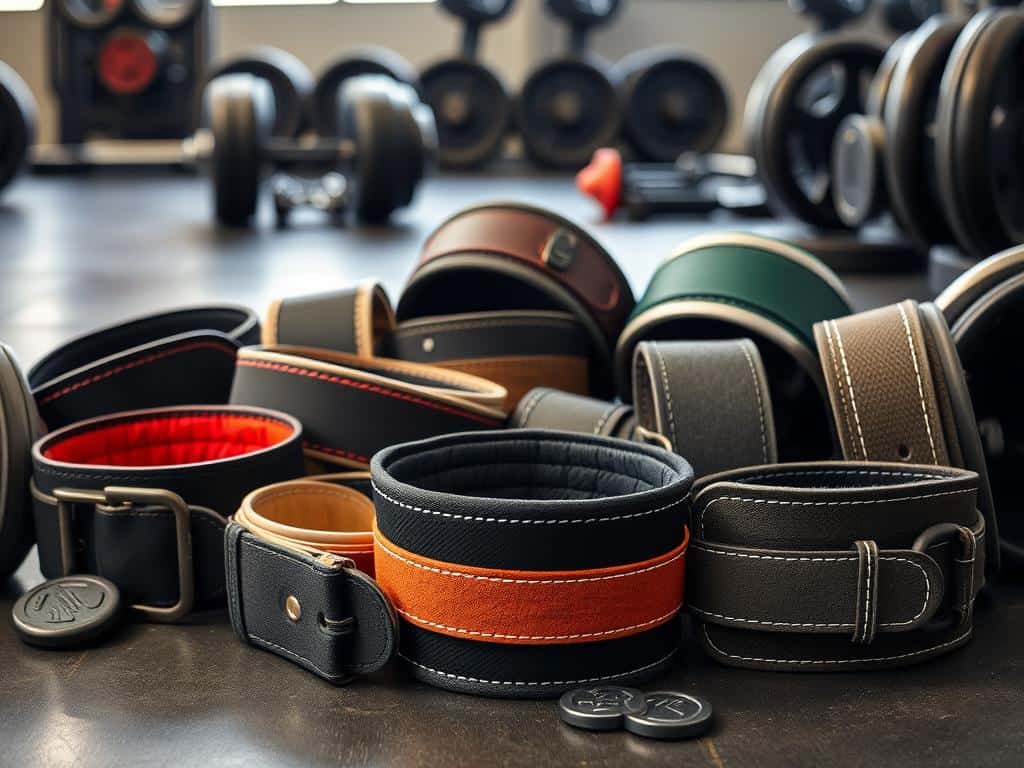
Each belt type meets different training needs. Prong belts are solid and provide a tight fit, making them great for powerlifters. Lever belts are easy to fasten with a lever, perfect for heavy lifting.
CrossFit athletes like the adjustable Velcro belt for its fit and ease. Tapered belts, wider at the back and narrower in front, offer flexibility for dynamic exercises.
Key Features to Look For
In selecting a belt, I consider features that boost comfort and efficiency. Material matters; leather for durability and support, and nylon for flexibility. The belt’s closure type is also important; single-pronged belts are simpler than double-pronged, and levers need occasional readjusting but are quick.
Accurate waist measurement ensures a perfect fit. Checking a belt’s width and thickness is key for back support. This lets me enhance my training.
Conclusion
Choosing the right weightlifting belt is a crucial step for safe and effective strength training. These belts help support our core muscles, make us more stable, and boost lifting performance by encouraging good form. Yet, it’s important to not overlook some cons like the possible decrease in abdominal muscle work and becoming too dependent on the belt.
In this article, I’ve talked about when and who should consider wearing a weightlifting belt. While it’s not needed for beginners, those with more experience can find it useful. Especially during heavy lifts or when tiredness affects form. A good weightlifting belt can increase safety and help maintain proper lifting techniques.
When I decide to get a weightlifting belt, it should match my training goals. It’s a key piece for maxing out my potential safely. I need to balance belt use with developing core strength and technique. This balance will help me keep getting better and stronger.