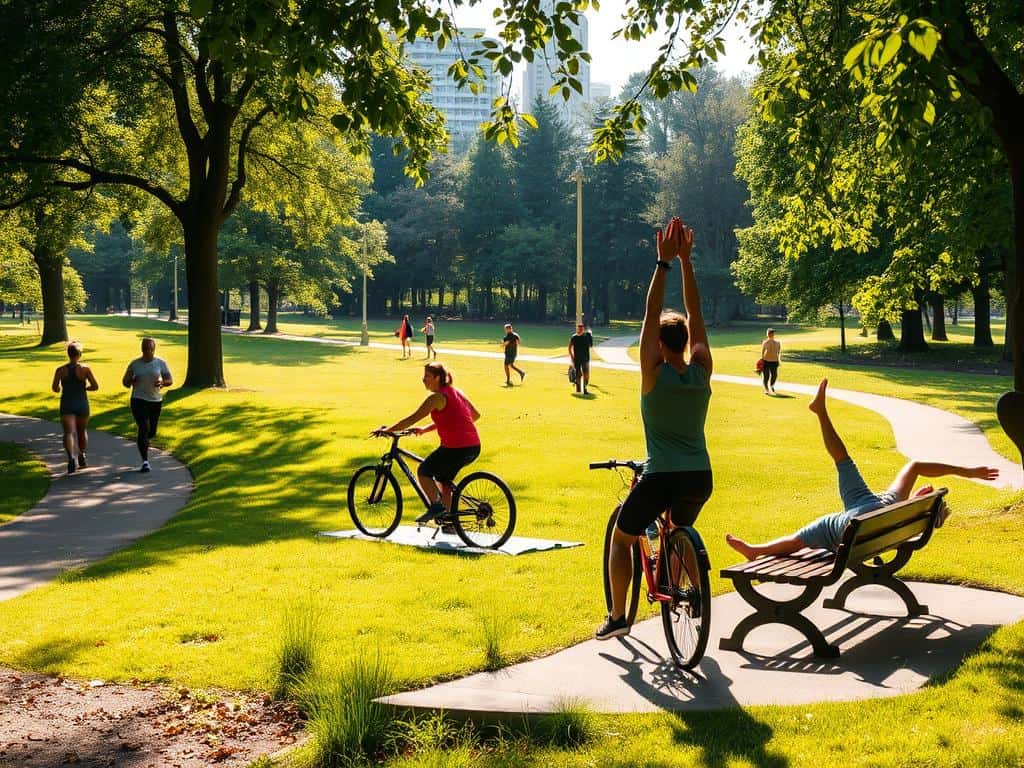
Did you know a 10-minute dynamic warm-up can boost your shuttle run, medicine ball throw, and jump distances? A study in the Journal of Strength and Conditioning Research shows dynamic stretching beats static stretching in warm-ups. It highlights how crucial flexibility exercises are for better mobility, peak performance, and injury prevention.
Flexibility lets our joints move freely without pain. It’s key to do stretching exercises. They help us do everyday tasks easier and improve sports skills. Flexibility training brings many pluses. It improves balance, posture, and lowers injury risk. Today, we’ll look at five easy stretches that boost mobility and help fit flexibility exercises into your day.

Key Takeaways
- Dynamic stretching boosts performance in various activities.
- Improved flexibility eases daily movements and reduces injury risks.
- Stretching enhances balance, which is vital for older adults.
- Better posture can be achieved through consistent flexibility training.
- Short stretching routines can significantly contribute to physical performance.
The Importance of Flexibility in Daily Life
Flexibility and mobility are key for staying active. Flexibility lets muscles and joints move freely. Mobility is about having a full range of motion. Both are important for doing everyday tasks and enjoying hobbies.
Understanding Flexibility and Mobility
Flexibility often decreases as we get older. This can make daily life harder. Being less flexible can lead to stiffness and pain, especially if you sit a lot. This stiffness can make it easier to get hurt.
Doing flexibility exercises helps our brain and muscles work better together. This improves how we move in our daily lives.
Benefits of Improved Flexibility
Being more flexible has many benefits. Stretching regularly helps prevent injuries. It can also lower the chances of falling.
Flexible muscles get more blood flow. This helps keep joints well-lubricated. Stretching can ease chronic pain, improve posture, and reduce stress. All these benefits improve our life quality.
5 Easy Stretches to Improve Mobility
Adding stretches to my routine changed how flexible I feel. These moves focus on muscles that limit our flexibility. Here are five key stretches that can boost mobility. They keep muscles flexible and lower injury risks.
Ankle Mobility Stretch
This stretch makes ankles more flexible. I sit and cross one leg over the other, pulling the foot toward me. I keep my knee bent. Doing this for 30 seconds on each side strengthens and makes ankles flexible.
Walking Hip Openers
Walking hip openers are great for the hips. I step forward, bring one knee to my chest, and rotate it out. This move opens up the hips and works the core. I do 5 to 10 reps on each side to stay fluid.
Thoracic Spine Windmills
This one targets the upper body. Standing with my feet apart, I extend my arms and twist gently. It improves spine mobility and eases back tension. I hold each twist for 10-15 seconds, doing 2 to 3 sets per side.
Shoulder Pass-Through
I use a band or towel for this shoulder stretch. Holding it above my head, I move it back and forth. It stretches the shoulders and chest well. I aim for smooth moves, holding each for 30 seconds.
Neck Half Circles
To ease neck stiffness, I do neck half circles. I drop my ear to one shoulder and roll my head. It boosts neck mobility and feels relaxing. I spend about 10-15 seconds on each side.
Incorporating Flexibility Training into Your Routine
Making flexibility training a part of my daily life has been incredibly rewarding. It’s key to stick to a routine to see the benefits of stretching. It not only boosts your motion range but also lowers muscle stiffness and ups athletic performance. I’ve discovered that simple, brief daily stretches greatly boost my flexibility.
Creating a Consistent Routine
To get the full perks of flexibility training, consistency is crucial. Just three minutes of stretching each day can make me significantly more flexible over time. I aim to stretch two to three times a week. This habit allows my muscles to become more flexible. I also make sure to stretch important muscle groups like my calves, thighs, and shoulders.
Timing Your Stretches
Timing is key for the best stretch results. I stretch after a warm shower or before sleep to use my muscles’ warmth. Stretching each muscle for 30 to 60 seconds, especially the tight ones, helps a lot. Foam rolling before exercises also boosts my flexibility. Knowing when to stretch has greatly improved my training.
Conclusion
It’s crucial to add flexibility training to my daily routine. This helps me move better and lowers my risk of getting hurt. The stretches in this article are a great start for improving flexibility and health. Dynamic stretches even boost my strength and how well I perform.
Studies highlight that Active Isolated Stretching (AIS) and Proprioceptive Neuromuscular Facilitation (PNF) work well. They make me more flexible faster. If I stretch a little every week, I’ll stay flexible as I get older. Drinking plenty of water also keeps my muscles elastic and helps me move smoothly.
A regular routine of stretching keeps me doing what I love without pain. The right stretching strategies improve my life and keep me advancing physically. By sticking to these methods, I change the way I move and make everyday life better.