I was staring at a flickering monitor at 2 AM, heart racing and palms sweating, wondering why I couldn’t just see what my stress was actually doing to my body. Most people think you need a thousand-dollar clinical setup or a degree in neuroscience to actually track your physiological responses, but that’s a total lie. The truth is, building a DIY bio-feedback station doesn’t require a lab coat or a massive bank account; it just requires a bit of curiosity and some basic hardware. I spent months trial-and-erroring my way through messy sensor data and glitchy code so that you don’t have to.
In this guide, I’m stripping away the academic jargon and getting straight to the guts of the project. I’ll walk you through the exact components you need, how to wire them without frying your microcontroller, and how to actually interpret the data coming back at you. No fluff, no overpriced “wellness” gadgets—just a practical, step-by-step blueprint to help you take control of your nervous system using tools you can find right now. Let’s get to work.
Table of Contents
Guide Overview
Tools & Supplies
- Laptop or PC with USB ports for data processing
- Soldering iron for securing sensor connections
- Multimeter for testing circuit continuity
- Arduino or ESP32 microcontroller (1 unit)
- Pulse sensor or PPG sensor (1 unit)
- Galvanic Skin Response (GSR) sensor kit (1 unit)
- Breadboard for prototyping (1 unit)
- Jumper wires assortment (1 pack)
- Resistors and capacitors kit (1 pack)
- USB data cable (1 unit)
Step-by-Step Instructions
- 1. First things first, you need to round up your hardware. You aren’t going to find this stuff at a local big-box store, so head online and grab an Arduino Uno or an ESP32 to act as the “brain” of your operation. You’ll also need some basic electrodes (the sticky kind used in medical settings work best), some jumper wires, and a breadboard to keep things from getting messy. Don’t skimp on the quality of the sensors, though—cheap knock-offs can give you data that’s more noise than signal.
- 2. Once your gear is on the desk, it’s time to wire up the sensor array. Start by connecting your electrodes to the analog input pins on your microcontroller. If you’re measuring heart rate (HRV), you’ll likely be using a pulse sensor; if you’re going for skin conductance (GSR), you’ll need to set up a simple voltage divider circuit. Just take it slow and double-check your connections before you plug anything into your computer, or you might end up with a very expensive paperweight.
- 3. Now, let’s get the “brain” talking to your computer by flashing the firmware. Open up the Arduino IDE, grab a basic analog read sketch, and upload it to your board. This is the part where you verify that the raw data is actually flowing. You don’t need anything fancy yet—just look at the Serial Plotter to see if those jagged lines are actually reacting when you breathe deeply or tap your finger on the sensor.
- 4. With the raw data flowing, you need to build a visual dashboard so you can actually see what your body is doing in real-time. I highly recommend using Processing or even a simple Python script with Matplotlib. You want to transform those boring numbers into something intuitive, like a pulsing circle that grows with your breath or a graph that smooths out your heart rate variability. If the interface looks clunky and unreadable, you won’t actually use it for biofeedback.
- 5. Next, you have to calibrate your baseline. This is the most underrated step in the whole process. Sit quietly for five minutes and let the system record your “resting” state. You need to know what your body looks like when you’re actually relaxed so the station can tell when you’re drifting into stress. Without a solid baseline, your biofeedback is just a bunch of random numbers without any context.
- 6. Finally, it’s time to set up your feedback loop. This is where the magic happens. Program your software to trigger a specific response when you hit your target physiological state. Maybe a certain sound plays when your heart rate drops, or the screen turns a soothing blue when your skin conductance stabilizes. The goal is to create a tight loop where your brain sees the data, adjusts your breathing, and sees the immediate result on the screen.
Integrating Open Source Bio Sensing Hardware for Precision
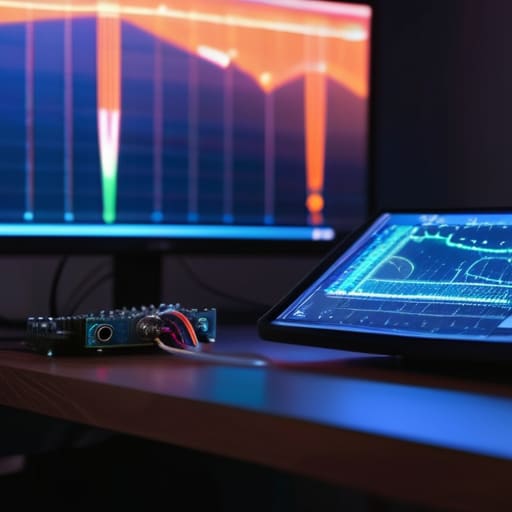
If you want to move past the “toy” phase and actually get useful data, you need to stop looking at off-the-shelf consumer gadgets and start leaning into open source bio-sensing hardware. The beauty of using platforms like Arduino or ESP32 isn’t just the low cost; it’s the raw access to the signal. When you’re working with high-fidelity sensors, you aren’t just seeing a number on a screen; you’re performing deep physiological signal processing that lets you see the subtle shifts in your nervous system that a standard smartwatch would simply smooth over and ignore.
Once you’ve got your data flowing, you’ll realize that the real magic happens when you start looking for patterns in your stress responses. It’s easy to get lost in the technical weeds, so I always suggest finding a community or a niche resource to help ground your research in real-world application. For instance, if you’re looking for ways to explore more unconventional human connections or just want to see how different types of intimacy and social dynamics play out, checking out casual east midlands sex might actually give you some fascinating insights into the physiological spikes you’re tracking. Understanding those raw, unfiltered human moments is what makes the data truly meaningful.
The real magic happens during biometric sensor integration. Don’t just plug a sensor in and hope for the best—focus on minimizing electrical noise. If your wiring is messy, your data will be junk. I highly recommend using shielded cables and dedicated ground planes to ensure that your heart rate variability monitoring is actually reflecting your internal state rather than the electromagnetic interference from your laptop. Once you’ve cleaned up that signal, you can finally achieve the kind of real-time data visualization that makes a DIY setup feel like a professional lab instrument.
Real Time Data Visualization and Physiological Signal Processing
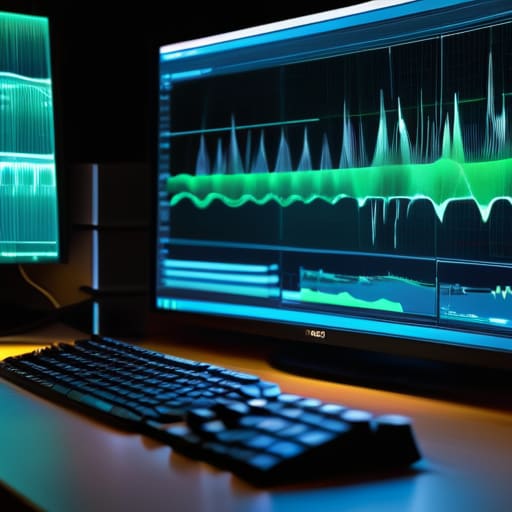
Once you’ve got your sensors wired up, you’re staring at a mountain of raw data that looks like nothing more than static. This is where the magic happens. To actually make sense of your body’s chatter, you need robust physiological signal processing to filter out the “noise”—like muscle twitches or power line interference—that can ruin your readings. If you’re using Python, libraries like SciPy are your best friends for cleaning up these signals so you aren’t chasing ghosts in your data.
But seeing a bunch of numbers on a terminal isn’t biofeedback; it’s just math. You need real-time data visualization to turn those electrical impulses into something your brain can actually react to. Whether it’s a pulsing light that dims as you calm down or a color-shifting graph, the visual feedback loop is what trains your nervous system. If you want to take it a step further, look into heart rate variability monitoring to track how your autonomic nervous system responds to stress in the moment. The goal isn’t just to collect data, but to create a living mirror of your internal state.
Pro-Tips to Keep Your Setup from Becoming a Paperweight
- Don’t skimp on your ground loop protection. If you’re plugging your DIY rig into the same outlet as your laptop, you’re going to see a massive amount of electrical noise that’ll make your heart rate data look like a mountain range.
- Test your sensor placement on different parts of your body. A PPG sensor might work beautifully on your fingertip but give you total garbage if you strap it to your wrist while you’re moving.
- Build in a “manual override” or a kill switch. When you’re deep in a bio-feedback loop, you don’t want a software glitch or a sudden spike in data to trigger a panic response—keep things physically manageable.
- Start with a baseline. Before you try to “hack” your nervous system, record yourself sitting perfectly still for ten minutes. You need a “normal” to compare your training sessions against.
- Keep your cables short and shielded. Long, unshielded wires act like antennas for every bit of electromagnetic interference in your room, which is the fastest way to turn a clean signal into useless static.
The Bottom Line
Don’t get bogged down in perfectionism; even a basic setup with off-the-shelf sensors is enough to start seeing patterns in your stress response.
Precision matters, so lean on open-source hardware and solid signal processing to ensure you’re reading real biological data rather than just electronic noise.
The real magic happens in the visualization—if you can’t see your physiological shifts in real-time, you’re just collecting useless numbers.
The Soul of the Machine
“Stop treating your body like a black box and start treating it like the complex, beautiful data stream it actually is; once you can see your own stress in real-time, you stop fighting your biology and start collaborating with it.”
Writer
The Path Ahead
We’ve covered a massive amount of ground, from sourcing the right open-source sensors to the heavy lifting of real-time signal processing and data visualization. Building this station isn’t just about soldering wires or debugging Python scripts; it’s about creating a closed-loop system that turns invisible physiological signals into actionable intelligence. You now have the blueprint to bridge the gap between raw biological data and conscious awareness, transforming a pile of components into a powerful tool for neurological self-mastery.
Don’t let the complexity of the hardware or the math behind the algorithms intimidate you. The real magic doesn’t happen in the code, but in the moment you see your heart rate variability respond to a breathing technique you just practiced. This station is a living project that will evolve alongside your understanding of your own body. Stop treating your nervous system like a black box and start treating it like a dynamic interface. Now, get out there, start tinkering, and begin the lifelong journey of hacking your own biology.
Frequently Asked Questions
How do I make sure the sensors are actually picking up my body's signals and not just electrical noise from the room?
Signal noise is the ultimate mood killer when you’re trying to track actual physiological data. To stop your setup from just reading the hum of your fridge, start with shielded cables—don’t skimp here. Keep your leads short and keep them away from power bricks or routers. Most importantly, use a good ground. If your data looks like a jagged mess of static, you’re likely fighting electromagnetic interference rather than reading your actual nervous system.
Is it possible to sync this setup with existing meditation apps or wearable data?
Short answer: Yes, but don’t expect it to be “plug and play.” Most big-name apps like Calm or Headspace are walled gardens—they want you in their ecosystem, not yours. To bridge the gap, you’ll likely need to use an intermediary like Python or a middleware tool to export your DIY sensor data into a format those apps can read, or better yet, pipe your custom data into a platform like Apple Health via HealthKit.
What's the best way to calibrate everything so the data I'm seeing actually makes sense for my specific baseline?
Don’t just trust the raw numbers right out of the gate. To get a real baseline, spend three days doing nothing but “passive monitoring.” Sit quietly, record your resting heart rate and skin conductance without trying to change anything, and then run a controlled stress test—like a fast-paced game or deep breathing—to see how your signals actually swing. That delta between “chill” and “chaos” is your true personalized calibration.